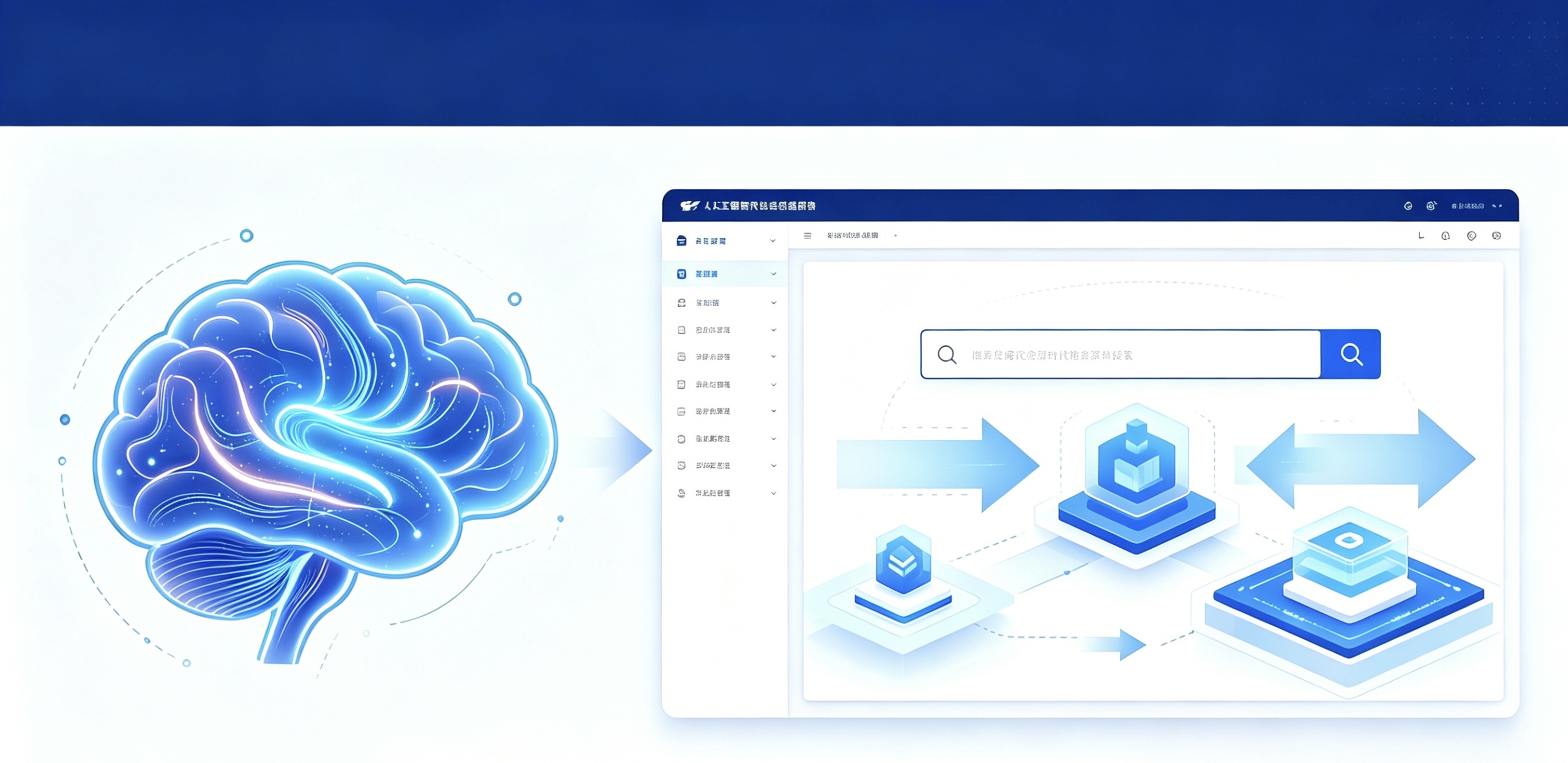
In the AI Agent Era, Search Capability Is Becoming a Core Infrastructure for Intelligent Applications
A technology-focused blog covering AI, cloud services, VPS, networking solutions, and internet infrastructure. We share industry insights, practical experiences, and useful resources to help developers, businesses, and tech enthusiasts explore better digital solutions.

With the rapid evolution of generative AI, AI Agents are moving beyond simple conversational assistants and becoming autonomous systems capable of performing complex tasks.
In the past, people mainly used AI for:
- Content generation;
- Document summarization;
- Code assistance;
- Question answering.
However, the next generation of AI Agents will take on far more advanced responsibilities, including:
- Collecting real-time market intelligence;
- Monitoring industry trends;
- Analyzing business information;
- Gathering global data sources;
- Executing multi-step workflows.
To achieve these capabilities, relying only on large language models is no longer enough.
AI Agents need not only reasoning capabilities, but also the ability to access and understand the constantly changing world around them.
This is where search capability becomes a critical foundation.
Why AI Agents Need Real-Time Search Capabilities
Large language models have powerful reasoning and language understanding abilities, but they are naturally limited by their training data.
The internet changes every second:
- News events evolve continuously;
- Product information changes frequently;
- Market conditions shift rapidly;
- New technical resources are published every day.
Without access to real-time information, AI Agents may provide outdated or incomplete responses.
Therefore, modern AI Agents need the ability to:
- Discover new information;
- Access fresh data sources;
- Analyze multiple perspectives;
- Continuously update their knowledge.
Search transforms AI from a system that only “knows information” into one that can actively “discover information.”
AI Agent Search Is More Than Finding Web Pages
Traditional search engines are designed to answer one simple question:
How can users find relevant information?
AI Agent search solves a different problem:
How can an intelligent system obtain the information required to complete a task?
For example, when an AI Agent is asked to analyze an international market, it may need to:
- Understand the research objective;
- Search relevant sources;
- Access information from different regions;
- Extract valuable insights;
- Generate a structured analysis report.
In this process, AI Agents are not simply retrieving webpages.
They are exploring, processing, and understanding information from the broader internet environment.
Global Information Access Creates New Challenges for AI Agents
As AI applications expand, many tasks are becoming increasingly global.
Examples include:
- Cross-border e-commerce research;
- International market analysis;
- Competitive intelligence gathering;
- Global trend monitoring;
- Data-driven business decisions.
However, internet access is not always identical across regions.
Websites may:
- Display different content depending on location;
- Apply regional restrictions;
- Identify visitor origins;
- Limit automated access patterns.
For AI Agents that need to collect information from multiple markets, flexible and reliable network access has become increasingly important.
IP Proxy Infrastructure Is Becoming an Important Component of AI Data Access
IP proxy technology provides AI applications with more flexible and reliable internet connectivity.
By utilizing proxy networks, AI Agents can:
- Access internet resources through different geographic locations;
- Collect region-specific information;
- Improve data acquisition stability;
- Support global-scale research workflows.
For example, an enterprise building an AI market research agent may need to understand customer trends across Europe, Asia, and North America.
Through geographically distributed IP resources, the AI Agent can access publicly available information from different regions and generate more accurate market insights.
This allows AI systems to better understand real-world environments.
Network Access Capability Is Just as Important as AI Intelligence
When discussing AI Agents, people often focus on:
- Model performance;
- Reasoning capability;
- Algorithm improvements.
However, a truly effective AI Agent requires a complete technology stack:
AI reasoning + Data access + Network connectivity
Each component plays a different role:
- The AI model provides understanding and decision-making;
- Search systems provide information discovery;
- Network infrastructure enables reliable access to real-world data.
Without strong connectivity, even the most advanced AI models may struggle to perform practical tasks.
How IP Proxy Solutions Improve AI Workflows
In real-world AI applications, reliable IP proxy infrastructure can help solve several important challenges.
1. Supporting Global Data Collection
Many AI applications require insights from different markets and regions.
With geographically distributed IP resources, organizations can better understand:
- Customer behavior;
- Regional trends;
- Market changes;
- Industry developments.
This enables AI Agents to build more comprehensive and accurate insights.
2. Improving Data Access Reliability
AI Agents often need to continuously access large amounts of online information.
Stable proxy infrastructure helps:
- Reduce connection failures;
- Improve workflow consistency;
- Support large-scale automated processes.
For data-intensive AI applications, reliable connectivity is essential.
3. Enabling Flexible AI Use Cases
Different AI workflows require different network environments.
For example:
- Market research requires regional data access;
- Search intelligence requires stable connections;
- Automation systems require continuous availability;
- Enterprise AI applications require scalable infrastructure.
Flexible IP proxy solutions allow organizations to adapt network access based on specific AI requirements.
The Future: AI Agents Will Develop Stronger Information Awareness
Future AI Agents will not simply answer questions.
They will actively:
- Discover information;
- Analyze external environments;
- Adapt to changing conditions;
- Execute complex objectives.
To achieve this, AI systems need:
- Advanced reasoning models;
- High-quality data sources;
- Reliable network infrastructure.
Search becomes the “eyes” of AI Agents.
IP proxy infrastructure helps AI connect with the global internet more effectively.
Together, they create the foundation for intelligent systems that can operate in real-world environments.
Conclusion
The future of AI Agent development will not be defined only by model capabilities.
Powerful intelligent systems require the ability to understand the world, access information, and continuously complete complex tasks.
Search enables AI to discover information.
Data enables AI to understand knowledge.
IP proxy infrastructure enables AI to connect with global digital environments.
As AI Agents continue to evolve, network connectivity and data access infrastructure will become increasingly important components of the intelligent application ecosystem.