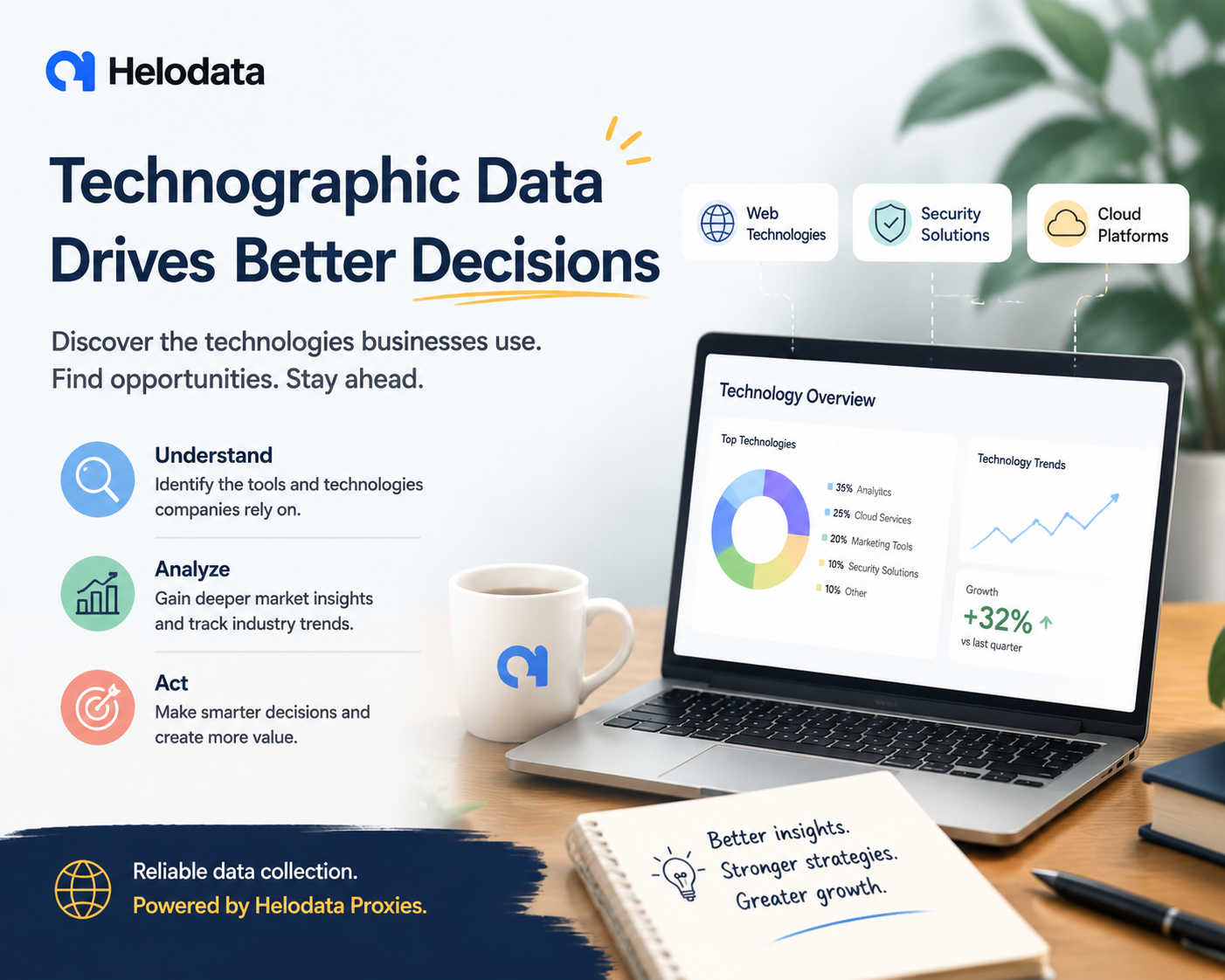
What Is Technographic Data and How Can Proxies Help Businesses Collect Better Insights?
Technographic data reveals the technologies businesses use and helps companies improve sales, research competitors, and understand markets. Reliable proxy infrastructure can support more accurate and scalable technology data collection.

In today’s digital world, understanding what technologies businesses use has become just as important as understanding their products or customers.
Companies are no longer relying only on traditional market research. They are analyzing digital footprints, technology adoption, and online behaviors to discover new opportunities. This is where technographic data comes in.
Technographic data provides insights into the technologies, software, platforms, and digital tools that organizations use. By understanding a company’s technology environment, businesses can make more informed decisions in sales, marketing, competitive research, and market analysis.
What Is Technographic Data?
Technographic data refers to information about the technologies used by companies or websites.
This data may include:
- Website technologies and frameworks
- Analytics and tracking tools
- Cloud service providers
- E-commerce platforms
- Advertising technologies
- Security solutions
- Software and business applications
For example, a company may want to know whether a potential customer uses a specific CRM platform, an e-commerce system, or a certain marketing automation tool.
These insights help businesses better understand their target market and create more personalized strategies.
Why Is Technographic Data Important?
1. Improve Sales Targeting
Knowing what technology a company uses can help sales teams identify better opportunities.
Instead of sending generic messages, businesses can create more relevant solutions based on a company’s current technology stack.
2. Understand Competitors
Technographic data allows companies to monitor competitors’ digital strategies.
By analyzing changes in website technologies, platforms, or online infrastructure, businesses can discover market trends and identify new opportunities.
3. Support Market Research
Technology adoption patterns reveal valuable information about industries and customer behavior.
Businesses can use these insights to understand which tools are becoming popular and where new market demands are emerging.
How Is Technographic Data Collected?
Technographic data can be collected through different methods, including:
Website Analysis
Many technologies leave digital signals behind. Tracking scripts, frameworks, plugins, and infrastructure details can provide clues about the tools a website uses.
Public Data Collection
Businesses often analyze publicly available information from websites, online directories, and digital platforms.
Data Enrichment
Companies can combine technology information with other business data to build more complete customer profiles.
However, collecting large amounts of technology-related data can become challenging due to website restrictions, geographic limitations, and access consistency.
The Role of Proxies in Technographic Data Collection
When collecting public web data at scale, maintaining reliable access is essential.
Websites may display different content depending on location, limit repeated requests, or use security systems to protect their resources.
Residential proxies can help businesses collect more accurate and consistent data by providing:
- Real residential IP addresses
- Location-based access
- More stable connections
- Better flexibility for large-scale data collection
For example, a company conducting global technology research may need to analyze websites from different regions. Using residential proxies allows researchers to view localized content and gather more complete insights.
Why Data Quality Matters More Than Data Quantity
Having millions of data points does not always mean better results.
High-quality technographic data depends on:
- Accurate information sources
- Reliable collection methods
- Consistent access
- Proper data validation
A smaller amount of accurate data can often provide more value than a large amount of unreliable information.
The goal is not simply collecting more data — it is collecting data that businesses can trust.
Building Better Data Workflows With Helodata
As businesses increasingly rely on digital intelligence, reliable data collection infrastructure becomes more important.
Helodata provides stable residential proxy solutions designed to support various online workflows, including market research, web data collection, and technology analysis.
With global coverage, reliable residential IPs, and flexible proxy solutions, businesses can build more efficient data collection processes while maintaining consistent access.
Final Thoughts
Technographic data helps businesses understand the digital world behind companies — what tools they use, how they operate, and where opportunities exist.
As technology landscapes continue to change, accurate data collection will become increasingly valuable.
With the right data strategy and reliable proxy infrastructure, businesses can turn online information into meaningful insights.